
Coffee & tea guides
How to choose an electric kettle for loose-leaf tea
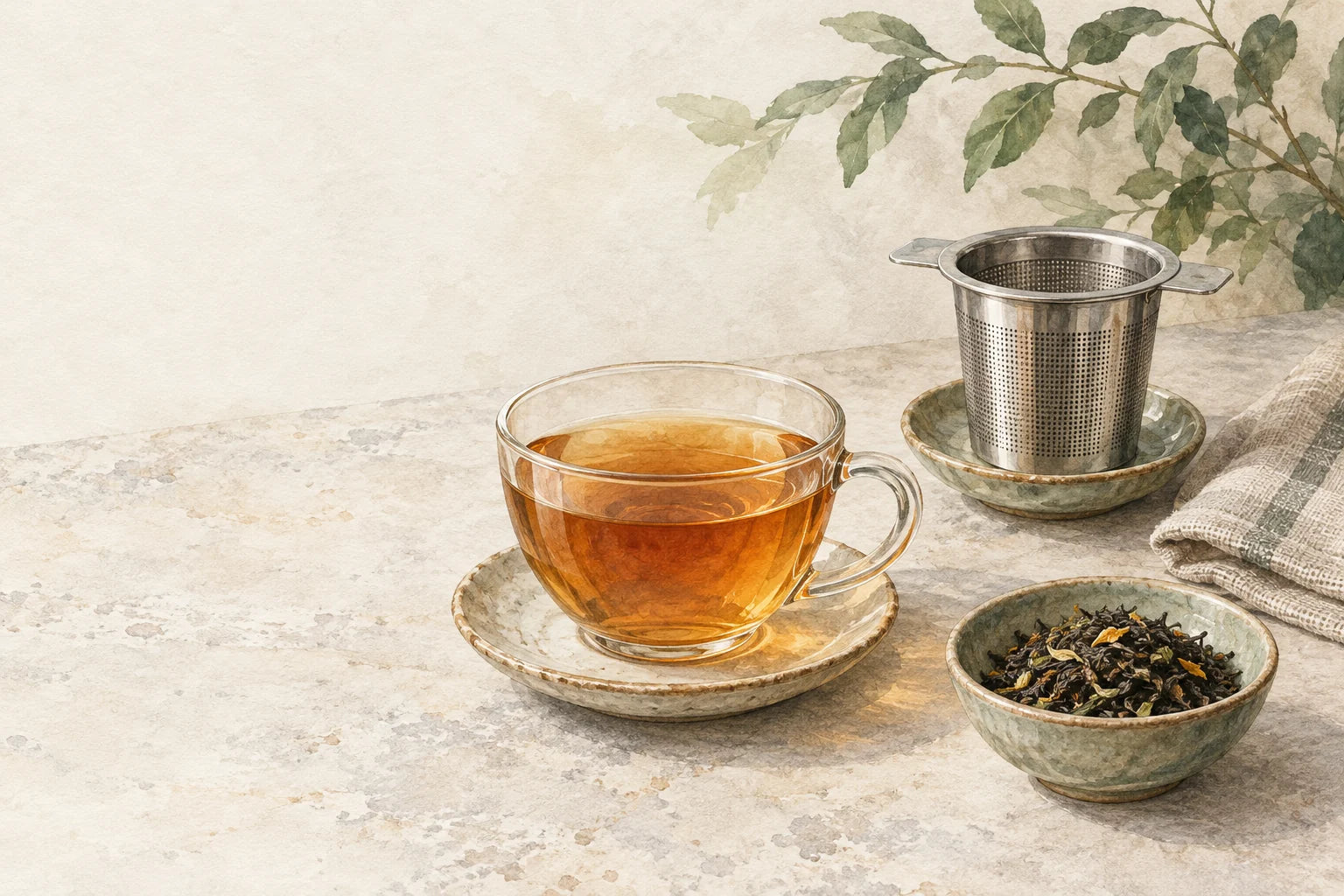
For loose-leaf tea, compare the usable capacity with the infuser installed, the temperature controls and the parts you will handle after brewing. A removable infuser can be convenient, but it is only useful if the whole routine fits the way you make tea.
Decide where the leaves will steep
You can heat water in a kettle and steep tea in a separate suitable teapot or cup. Alternatively, a kettle designed for tea may include an infuser for the leaves. These are different routines, so choose the one you want before comparing appearance or extra features.
An ordinary water kettle should not be treated as a tea brewer merely because tea leaves fit through its opening. Use each appliance only as described in its supplied instructions.
Compare tea-brewing capacity with water capacity
A headline capacity can describe heating water without the tea basket. The recommended fill with the basket installed may be lower.
For the EPEIOS Electric Tea Kettle with Infuser, the listed capacity is 1.0 L for water and a maximum recommended 0.8 L with the infuser. Check which figure matches your intended use. Also check the minimum and maximum markings on the appliance rather than calculating a fill level from cup size alone.
Choose controls that match your tea instructions
Keep the tea's instructions nearby when choosing a temperature and steeping time. Different teas and preparation styles can call for different settings; a universal temperature chart is not a substitute for the guidance supplied with the leaves.
The EPEIOS tea kettle lists a selectable range of 100–212°F. That lets you choose a setting within its operating range, but the setting alone does not determine how the finished tea will taste. Record the leaves, water amount and steeping time if you want to repeat a cup you enjoy.
Look at materials and access together
The EPEIOS model lists borosilicate glass inner walls, a 304 stainless steel interior base and a removable stainless steel infuser. Read the description of each water-contact part rather than assuming that one material name describes the entire appliance.
Think about the parts you will need to access after use: the basket, its openings and the inside of the kettle. Product photos can help you understand the shape, but the instructions should decide how each part is cleaned.
Plan the care routine before you buy
Before choosing a kettle, check four practical points in its manual:
- Which parts can be removed, and how should they be handled?
- Which parts may be washed, and are any parts dishwasher-safe?
- Which cleaning or descaling products and methods are permitted?
- What preparation, cooling and electrical precautions are required before cleaning?
Do not assume that a removable part is dishwasher-safe or that a household descaling mixture is suitable for every model. Use the method specified for your appliance. If the manual is missing or unclear, ask EPEIOS support for the instructions matching the model label before trying a cleaning treatment.
Choose around your main drink
If you mainly brew loose-leaf tea and want an integrated basket, start with the Electric Tea Kettle with Infuser. If your routine centers on manually pouring water over coffee, compare the Gooseneck Kettle with Brew Timer and the Gooseneck Electric Kettle.
U.S. purchases are completed on Amazon US. Check the selected listing for current price, availability and the exact color or model before ordering.
Common questions
Is removable the same as dishwasher-safe?
No. Removability describes how a part is fitted. Cleaning permissions must come from the model's instructions.
Can I use the full 1.0 L with the EPEIOS infuser installed?
The product listing recommends a maximum of 0.8 L when using the infuser.
Does this guide provide an EPEIOS descaling recipe?
No. The cleaning agent, concentration and procedure must be confirmed against the instructions for the exact model.